

We offer a comprehensive and continuous dataset to give you unique insights across multiple industries.
Insight

Our integrated data insights can be viewed and continually assessed with our software platform, Russell ALPS.
Analysis

Our expert consultants can take a customised and commercialised approach to problem-solving to suit your interests or situation.
Action
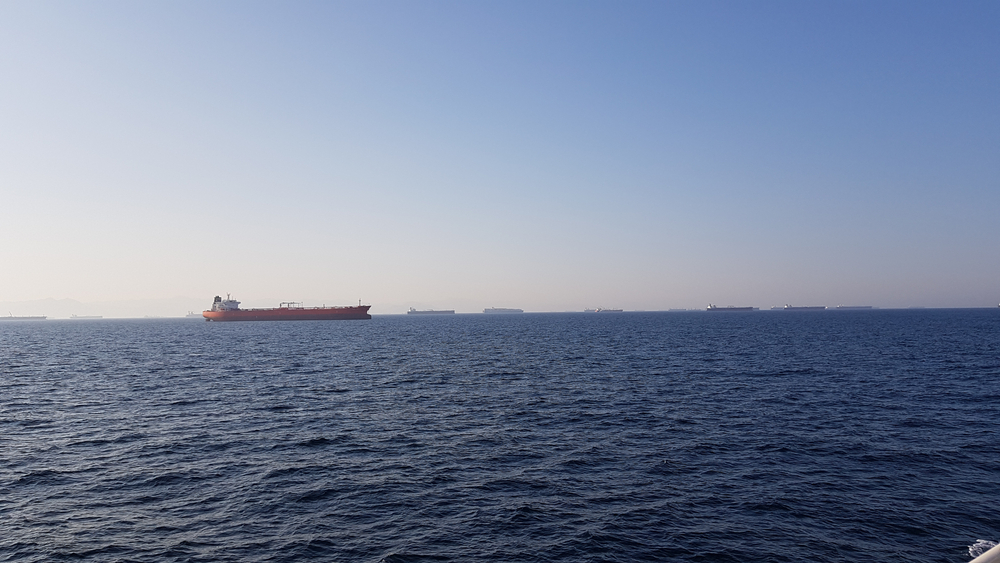
Crisis in the region exposes companies, airports and ports to significant economic exposure.
The escalating geopolitical conflict that erupted suddenly over the weekend exposes finance, insurance, real estate and manufacturing companies to $3.5 billion in insurance liabilities across the MENA region, according to our analysis by Russell.
By applying our specialty risk intelligence to an aggregated data analysis of the region’s most valuable sectors, we estimate the approximate liability as follows:
$1.9 billion insurance liabilities for finance, insurance, and real estate
$1.6 billion insurance liabilities for manufacturing*
Meanwhile, business owners of airports, ports, shipping vessels and aircraft face hundreds of billions of dollars of economic losses. The Strait of Hormuz alone is a recognised trade chokepoint with $407 billion of crude oil flowing through that major arterial shipping route annually, according to our analysis.
These Crude Oil flows are equivalent to 23% of all global crude oil trade, according to our analysis. Vessels have diverted from navigating the Strait of Hormuz, opting for the alternative route around South Africa, following Iranian retaliatory strikes on vessels.
Our forecasts of Q1 trade in 2026 shows:
Trade through Strait of Hormuz in Q1 2026 is $167 billion.
70% of trade is to China, India, South Korea & Japan
87% of trade is from UAE, Iraq, Kuwait, Qatar & Saudi Arabia
The Iran conflict has also caused significant disruption to aviation traffic, with airports in Dubai & Qatar cancelling flights and grounding aircraft, as the conflict spreads throughout the region.
Our analysis of 155 airports across the Middle East, revealed that on 28th February, 59 airports had aircraft on the ground, with 22 of these having an aggregate market value of aircraft of more than $1bn.
Out of the 22 airports, Dubai airport in UAE had the largest overall exposure with $7.86 billion. This was followed by Doha in Qatar with $5.98 billion, and Jeddah in Saudi Arabia with $5.49 billion.
Suki Basi, Managing Director, commented:
“We are in a brave new world, where business viability requires clarity over threats which are increasingly complex, and interconnected. More collaboration and scenario planning is needed across finance, treasury and risk management functions to assess the financial consequences of geopolitical events. This enables human intelligence to drive the scenarios and consequently the data analytics in risk assessment and mitigation, to achieve clarity.”
*Figures are indicative estimates based on sector-level revenue benchmarking and do not represent projected insurer balance sheet liabilities.



